
Cornwall Living
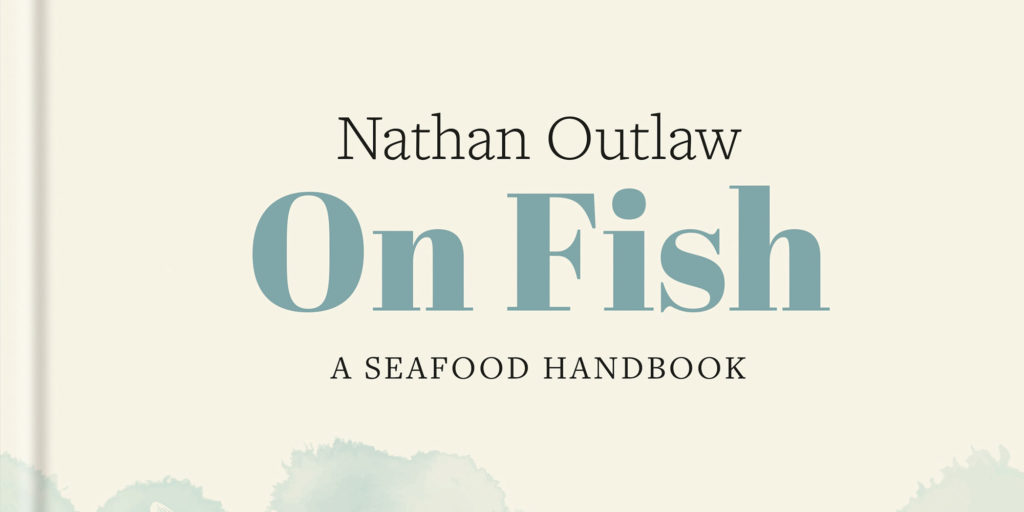
Nathan Outlaw, On Fish
Michelin-starred Nathan Outlaw distils three decades of experience as a foremost fish chef in a brand new handbook on cooking fish.
Extracted from On Fish: A Seafood Handbook by Nathan Outlaw is out now (Kyle Books, £30). Photography and props: Kate Whitaker
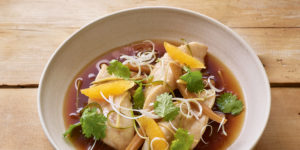
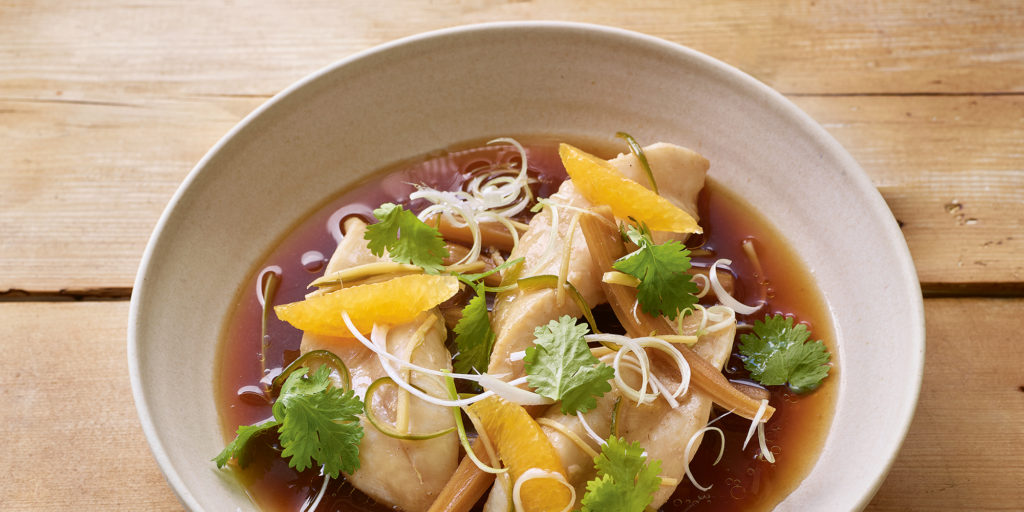
Braised Fillets of John Dory with Soy, Ginger & Celery
Serves: 4
Ingredients:
4 celery sticks, peeled and sliced
2 John Dory, 500g (1lb 2oz) each, filleted and skinned, each fillet cut into 3
6 spring onions, sliced
30g (1oz) fresh root ginger, peeled and finely chopped
1 green chilli, deseeded and finely sliced
Sea salt and freshly ground black pepper
For the braising stock:
200ml (7fl oz) fish stock
100ml (3½fl oz) white wine
100ml (3½fl oz) water
100ml (3½fl oz) soy sauce
50ml (2fl oz) white wine vinegar
20g (¾oz) caster sugar
To serve:
1 orange, segmented
A handful of coriander leaves
2 spring onions, finely sliced
4 teaspoons toasted sesame oil
Method
John Dory is a fish that varies in shape and size and can be tricky to get just right when you cook the fillets off the bone. I find it better to fillet the fish and then break it down into the natural ‘mini fillets’. This gives you six nice pieces from one fish, especially if they’re 1kg (2lb 4oz) plus, allowing you to check every piece of fish when cooking. Simply remove the smaller pieces as they’re done, leaving the thicker pieces to continue cooking. The cooking technique with this dish is nice and gentle, allowing you to see what’s going on. You can serve this as a starter or add some rice and extra vegetables for a
main course.
Heat the ingredients for the braising stock in a large, wide pan with a tight-fitting lid. Stir until the sugar has dissolved.
Add the celery to the pan and simmer gently for 5 minutes.
Season the fish with salt and pepper, then add it to the pan along with the spring onions, ginger and chilli. Put the lid on and simmer gently for 5 minutes.
Warm 4 serving bowls. Once the fish is cooked, share it among the bowls and pour over a few spoonfuls of the braising stock along with a portion of the braised celery. Add an orange segment to each piece of fish, scatter over the coriander leaves and spring onions, drizzle with the sesame oil and serve.
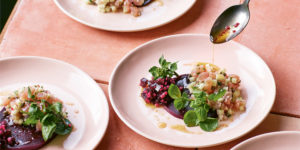
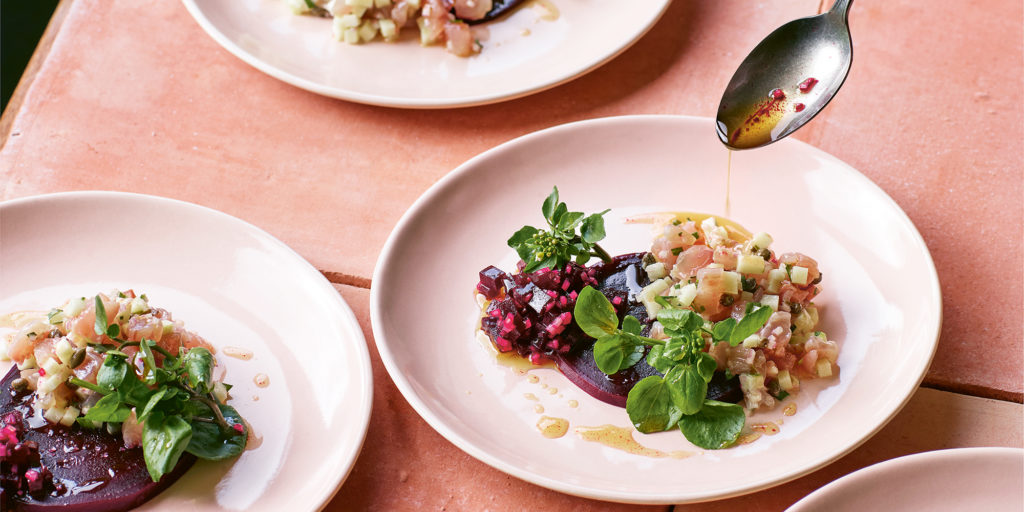
Mackerel Tartare with Beetroot & Apple
Serves: 4 (as a starter)
Ingredients:
2 very fresh large mackerel, gutted, filleted,
pin-boned and skinned
½ shallot, finely chopped
1 green apple (any acidic variety), peeled and diced
1 tablespoon small capers in brine
1 tablespoon chopped tarragon leaves
1 tablespoon cider vinegar
Sea salt and freshly ground black pepper
For the beetroot:
2 large beetroot, washed
100ml (3½fl oz) cider vinegar
2 sprigs of tarragon
A drizzle of extra virgin olive oil
½ shallot, finely chopped
To serve:
6 tablespoons extra virgin olive oil
2 handfuls of watercress, washed
Method
If you fancy giving a raw dish a go at home, this one is a great place to start. The hardest part will be getting the mackerel at its best, but – with prior warning – a good fishmonger should be able to get you some. If not, this dish would work well with bass or bream. If you don’t happen to be a beetroot lover you can substitute it for fennel or cucumber.
To cook the beetroot, place in a saucepan and cover with water. Add the vinegar, tarragon and 2 teaspoons of salt, then bring to a simmer and cook for 30–40 minutes until tender. Insert a small knife into the beetroot to see if it’s cooked. Leave to cool in the water.
When cool enough to handle, remove the skin and cut 4 thin slices from one beetroot. Finely chop the rest. Lay the slices out on a tray, season with salt and pepper then
drizzle with the extra virgin olive oil. Leave to cool completely.
For the tartare, cut the mackerel fillets lengthways, then cut into rough dice. Place all the fish in a bowl with the shallot, apple, capers and tarragon. Season with salt, pepper and the vinegar. Mix well, but with a light touch.
To serve, take 4 cold plates and place a slice of beetroot on each. Share the mackerel tartare alongside. Mix the chopped beetroot with the shallot and the 6 tablespoons of extra virgin olive oil, then add to the plates with
some watercress.